What builds confidence?
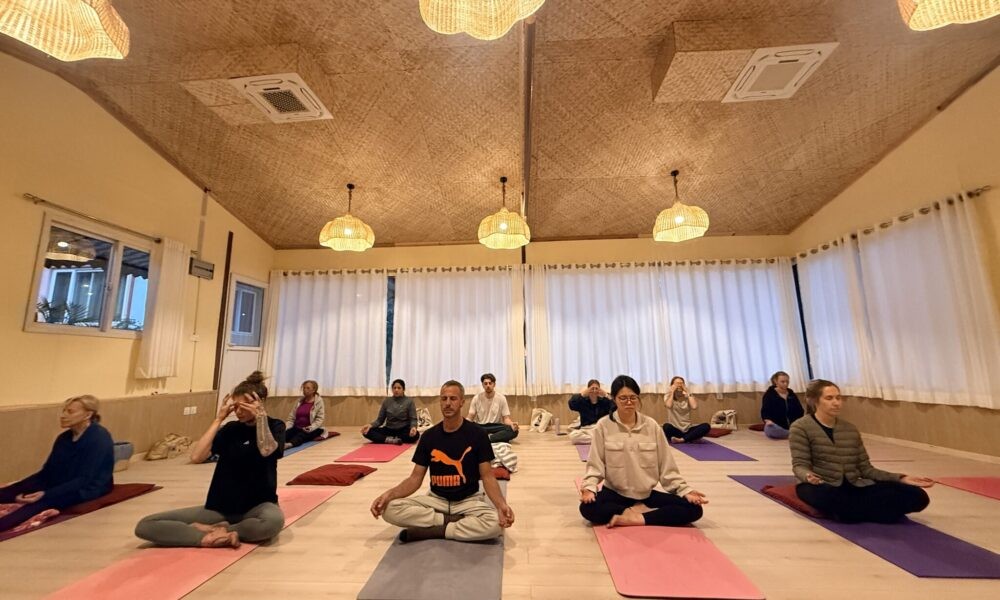
Confidence is built because the course requires a trainee to teach before they feel prepared, and this is central to how the programme is structured. First attempts often go badly. Words come out in the wrong order. A trainee confuses left and right. Someone forgets the next pose and stands silently, waiting for direction. The room remains patient. Nobody walks out, and nobody comments. The trainee finishes the sequence, sits down, and a quiet shift takes place internally, the kind of shift that accumulates across a month of repeated practice. This is a pattern most trainees encounter during Yoga Teacher Training in Thailand, where teaching practice begins long before anyone feels prepared. Reading manuals on cueing does not equip a trainee for the silence of ten faces waiting for instruction. Confidence is formed only through repeated practice, beginning with awkward attempts and gradually becoming steadier as the weeks progress.
How are skills built?
Teaching skills develop through repetition combined with sharp attention to detail rather than through memorisation of scripts. A first-week sequence and a third-week sequence appear as two separate classes. After three weeks, trainees begin to notice subtle indicators within the room, such as a wincing knee, a held breath, or a peer drifting out of alignment. Cues stop functioning as lines pulled from a workbook and begin to operate as direct responses to what is actually unfolding in the room. Several teaching skills tend to sharpen over the weeks:
- Cueing becomes shorter, and the words that remain perform the actual work.
- Demonstrations appear calmer because the trainee’s body knows the pose thoroughly.
- Sequencing follows the breath rather than fighting against its natural rhythm.
- Adjustments are placed on a shoulder with thought rather than in haste.
- Holding silence becomes a skill in its own right, with nobody rushing to fill it.
None of these capacities can be accelerated. They typically appear only once a trainee stops chasing polished delivery and begins working from what their own body has learned during the long hours of personal practice.
Sharpening teaching presence
Presence in a teaching room gets built somewhere else, oddly enough. A trainee usually sits alone for another hour before sunrise, when nobody is watching. The quiet formed during those mornings enters the classroom later, and students sense it without being able to name it, softening as soon as the quality enters. Anatomy classes give that presence something solid to rest on. Trainees learn why one hip opens easily, while another won’t, why one shoulder needs space, while another needs gentle pressure, and why a single cue won’t work for everyone. Learning how a body moves ends guessing, and speaking comes from knowing rather than hoping.
Finding your voice
A trainee finds their voice through teaching frequently enough that borrowed phrases fall away naturally. During the early weeks, every cue tends to resemble the tone of a senior teacher being imitated. By the middle weeks, the imitation begins to break apart. By the closing weeks, what remains is a manner of speaking that the trainee genuinely owns. Cues are delivered cleanly. A long pause feels useful rather than awkward. The trainee says less, and each line carries greater weight.
A trainee who arrived nervous about being observed leaves the programme steadily. The change is neither loud nor dramatic. It is the quiet difference of a person who built real teaching skills through hours of work, and who now trusts what their own voice carries into a room.