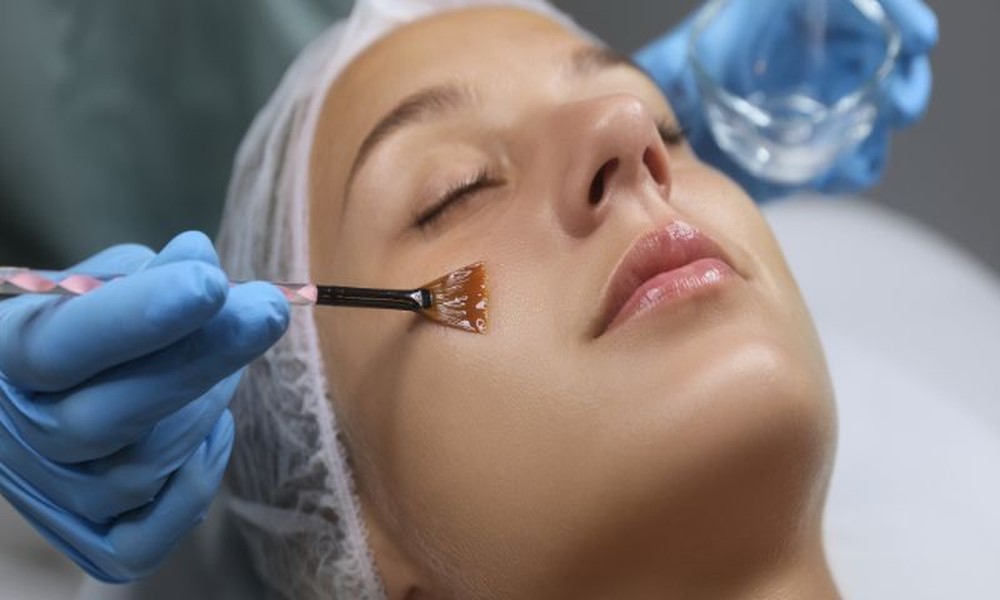
Chemical Peeling is a controlled skin exfoliation procedure that utilizes specialized solutions-such as AHA, BHA, or TCA-to remove damaged epidermal layers, revealing a smoother and more radiant complexion. Its primary mechanism is the acceleration of the physiological cell turnover process.
While a natural skin cycle typically lasts approximately 28 days, factors such as environmental stress and aging can cause this process to decelerate, leading to pore congestion and a dull appearance. Chemical peeling intervenes by safely facilitating the shedding of dead cells and stimulating the regeneration of healthy tissue.
What Skin Concerns Can Chemical Peeling Treat?
While over-the-counter exfoliants offer mild improvements, physician-administered chemical peels utilize higher concentrations tailored to specific dermatological needs. This approach offers several clinical benefits:
– Clears pore congestion and helps prevent acne. Acids selected by physicians, such as Salicylic Acid or BHA, are oil-soluble, allowing them to penetrate deep into the pores to dissolve excess sebum and accumulated dead skin cells. This provides deep cleansing that regular skincare cannot reach, making it harder for C. acnes bacteria to thrive. As a result, it helps reduce both clogged pores and inflammatory acne in the long term.
– Fades dark spots and post-acne marks. Chemical agents help exfoliate the outer skin layer where excess melanin (hyperpigmentation) has accumulated, allowing it to shed naturally. This helps address post-acne marks (PIH), sun spots, and superficial pigmentation while gradually brightening the skin once it has recovered after treatment.
– Stimulates deep collagen production. When performed at an appropriate depth, chemical peeling activates the skin’s natural repair process in the dermis. Once the outer layer is exfoliated, the body enters a healing response that stimulates new collagen and elastin production. This leads to improved skin elasticity, reduced appearance of fine lines, and overall firmer, healthier skin.
– Improves skin texture and even skin tone. It helps refine rough skin texture, enlarged pores, and uneven tone caused by sun damage through systematic skin resurfacing. The result is smoother, softer, more refined skin with a brighter and more balanced complexion.
How Many Chemical Peeling Sessions Are Needed to See Visible Results?
The recommended frequency is every 2-4 weeks, which aligns with the skin’s natural cell turnover cycle. This allows the skin enough time to recover properly while reducing the risk of thinning or increased sensitivity. The ideal interval varies depending on skin type: oily or acne-prone skin is recommended every 2-3 weeks, normal skin every 3-4 weeks, and sensitive skin may require intervals of 4 weeks or longer.
As for the number of sessions needed to see results, it depends on each individual’s skin concerns. In general, clogged pores or acne breakouts may show improvement after 2-3 sessions. Post-acne marks and dark spots typically require around 4-6 sessions. Dull skin or uneven skin tone usually improves within 3-5 sessions, while fine lines may require approximately 5-8 sessions or more for clearer and longer-lasting results.
How Should You Prepare Your Skin Before a Chemical Peel for the Best Results?
– Avoid scrubbing the skin or using strong active ingredients such as AHA, BHA, or retinol for 3-5 days before the procedure.
– Refrain from laser treatments or any procedures that may irritate the skin.
– Inform your doctor if you have a history of allergies or are using acne medication.
– Get enough rest to ensure your skin is in an optimal condition for recovery.
How to Care for Your Skin After a Chemical Peel for Faster Recovery and Minimal Irritation?
– Apply sunscreen with SPF 30-50 daily (very important).
– Avoid direct and intense sun exposure for at least 5-7 days.
– Do not exfoliate or pick at peeling skin.
– Use a moisturizer regularly to maintain skin hydration.
– Avoid irritating products such as alcohol-based skincare or strong acids.
Chemical Peeling is far more than a superficial exfoliation; it is a foundational dermatological method that supports sustained skin improvement. When administered consistently-with sessions typically spaced 2-4 weeks apart-and tailored to specific skin concerns, this treatment facilitates a structured regenerative process. This professional approach ensures that the skin improves gradually and safely, significantly minimizing the risk of irritation or barrier damage associated with improper at-home use.
The most critical factor in achieving optimal results is undergoing the procedure under the supervision of a qualified medical professional. An experienced physician can accurately assess your skin’s unique physiology and calibrate a treatment plan that addresses your specific concerns. Furthermore, adherence to a rigorous post-treatment skincare regimen is essential, as it directly influences the final outcome and recovery speed. For those seeking expert guidance, Better Me Clinic provides comprehensive skin evaluations and personalized treatment planning. Our physicians ensure that each chemical peeling session is carefully monitored and individualized, prioritizing both medical safety and long-term skin vitality.