Looking better is rarely about one dramatic change. In practice, the strongest results usually come from a small group of habits that improve body shape, skin quality, posture, energy and confidence at the same time. In London, where long workdays, travel delays, social eating and stress can all work against healthy routines, a realistic slimming approach matters more than a perfect one. The best outcomes are not based on punishing diets or short-lived fitness pushes. They come from practical decisions that people can repeat in ordinary life.
Medspa ‘s leading laser specialist notes that successful body improvement plans tend to work best when they focus on steady behaviour change, professional support where needed, and visible but manageable targets. For people exploring broader support around weight management London, the key advice is to aim for consistency rather than speed, because stable progress is usually more flattering, easier to maintain and less disruptive to skin tone, muscle definition and overall wellbeing.
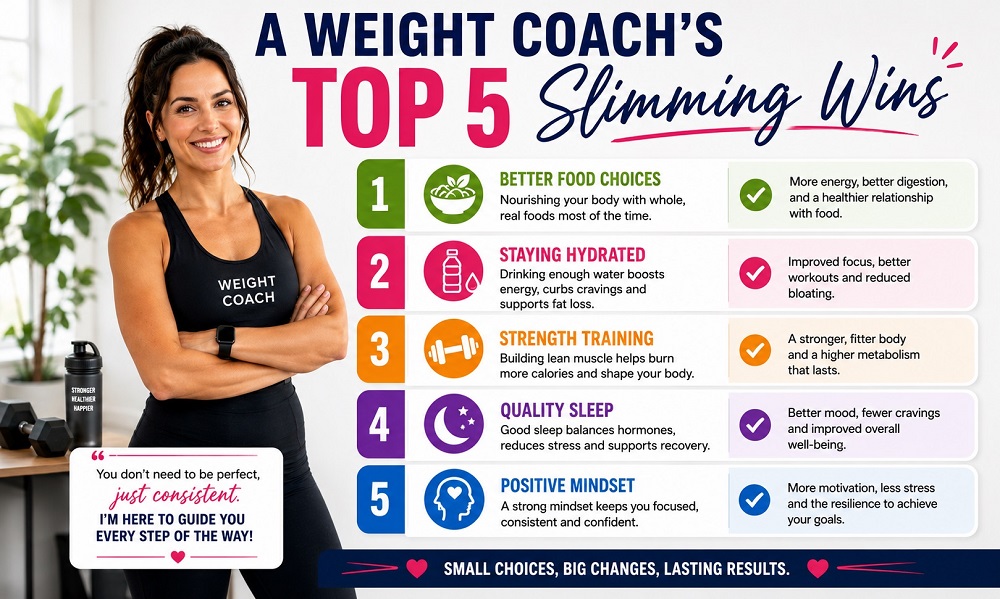
What follows are five slimming wins that a weight coach would place at the top of the list. They are not gimmicks. They are the methods that repeatedly help people look better, feel more in control and keep results for longer, especially in a city where convenience often pushes people towards the opposite direction.
Win One: Building a Routine That Survives a London Week
One of the biggest slimming wins is not a food choice or a gym membership. It is a routine that can survive real life. Many people do reasonably well on calm days and then lose the thread when work intensifies, trains are delayed, meetings run late or social plans appear at short notice. In London, that pattern is common enough to shape entire body goals. A weight coach quickly learns that the most useful plan is the one that still works on a rushed Tuesday, not only on an organised Sunday.
A durable slimming routine usually starts with fixed points rather than a minute-by-minute schedule. Breakfast may be simple and repeatable. Lunch may be planned before leaving home or chosen from a shortlist of reliable options near the office. Evening meals may be based on easy combinations such as lean protein, vegetables and a sensible carbohydrate portion rather than ambitious recipes that only happen once a month. This removes unnecessary decision-making and lowers the chance of defaulting to pastries, takeaway or convenience snacks.
Timing also matters. Long gaps without eating often lead to overeating later, particularly after commuting or post-work drinks. People who think they are “being good” by skipping meals often end up consuming more calories by the evening, with less awareness and less satisfaction. A coach would rather see regular, moderate meals than a day built around restriction followed by loss of control.
Another overlooked part of routine is environmental design. If a person’s flat contains mainly high-calorie snack foods, or if every office break becomes a coffee-and-cake habit, motivation alone rarely solves the problem. Slimming wins come faster when the easier option is also the better one. Keeping yoghurt, fruit, prepared salads, eggs, soups and portioned leftovers available has a direct effect on body composition over time.
The beauty angle is important here. People often notice that when they adopt a steadier routine, they do not only lose weight. Their face looks less tired, bloating reduces, their skin can appear calmer and their clothes sit more cleanly. These are visible rewards, and visible rewards reinforce behaviour. A dependable weekly structure may sound unglamorous, but it is one of the most effective appearance-improving tools available.
Win Two: Protecting Muscle While Losing Fat
The second major slimming win is understanding the difference between getting lighter and looking better. The scale can go down while body shape improves very little, especially if a person loses muscle along with fat. A weight coach will usually place great emphasis on preserving lean tissue because muscle has a direct effect on how the body looks in clothing, how firm it appears and how well weight loss is maintained.
Many adults, particularly busy professionals, try to slim down by simply eating less and moving a bit more. That can work in the short term, but it often leads to a softer appearance if resistance training and adequate protein are missing. The number on the scale becomes the main measure, even when the mirror suggests that progress is underwhelming. This is one reason some people become frustrated after losing a noticeable amount of weight. They expected sharper contours, a better waistline or improved definition, and instead they mainly see a smaller version of the same shape.
A more effective strategy is fat loss with muscle retention. This usually means a moderate calorie deficit rather than an extreme one, plus regular strength work. That does not require bodybuilder routines. Two or three sessions a week focused on major movements can be enough to protect muscle and improve posture. Better posture alone can make the body appear leaner and more elegant. Shoulders sit differently, the waist is more visible and the overall silhouette improves.
Protein intake also deserves attention. People tend to underestimate how much this matters during slimming phases. Protein supports muscle maintenance, helps with fullness and can make meals more satisfying. In ordinary terms, it makes it easier to look better while eating less. Fish, chicken, Greek yoghurt, eggs, tofu, beans and cottage cheese are all useful options, and practical choices matter more than dietary fashion.
For beauty-focused clients, the value of muscle retention is often immediate. Firmer arms, better shape through the hips and thighs, and a more lifted appearance through the upper body all contribute to a polished look that simple dieting does not always create. Rapid weight loss without structure can leave people feeling flat, tired and disappointed. Slower, smarter fat loss tends to produce a result that looks healthier, stronger and more refined.
Win Three: Reducing Bloating for a Faster Visible Difference
Not every slimming win comes from fat loss itself. A surprisingly large number of people look and feel noticeably better when bloating is brought under control. This is one of the fastest changes a weight coach can deliver because abdominal fullness, puffiness and fluid retention can shift within days, long before major weight changes appear. For someone motivated by visible improvement, that early change can be extremely valuable.
Bloating is often discussed casually, but it has real impact on appearance and comfort. The waistline can fluctuate, clothes may fit differently across the week and the face can look heavier or more tired. In a city lifestyle shaped by rushed meals, alcohol, salt-heavy takeaway food, inconsistent hydration and stress, the problem is common. It is also often mistaken for fat gain, which can lead people to panic and over-correct.
A weight coach would usually start by looking at meal pattern, fibre balance, hydration and common triggers. Some people eat too quickly and take in excess air. Others rely on highly processed convenience foods that are easy to overconsume and rich in sodium. Some under-hydrate during the day, then overcompensate in the evening. Others swing between very “clean” eating and indulgent meals, creating digestive inconsistency. None of these patterns are unusual, but all can affect how slim a person appears.
Alcohol deserves special mention because its effect is not limited to calories. It can disturb sleep, increase poor food choices, dehydrate the body and contribute to the swollen, puffy look that many people recognise after a social weekend. Reducing alcohol intake even slightly can improve facial definition and abdominal comfort in a way that feels disproportionately rewarding.
Stress is another factor. High stress can influence digestion, appetite and food choice all at once. It can also encourage shallow breathing, poor sleep and irregular eating, all of which work against a settled digestive system. In practical coaching, this means that bloating is not only a food issue. It is also a lifestyle issue.
The beauty benefit of reducing bloating is obvious. A flatter midsection, cleaner jawline and less puffy eye area can make a person look fresher almost immediately. While true fat loss takes time, lowering bloating gives a quicker visual win and often provides the encouragement needed to stay with a broader plan. In appearance terms, that is a powerful advantage.
Win Four: Making Social Eating Work Without Ruining Progress
A fourth top slimming win is learning how to manage social eating. In London, meals out, office treats, weekend brunches, networking events and convenience-driven eating can easily become the main obstacle to progress. Many people do well in private and then lose momentum in social settings because they treat eating out as a complete break from their goals. A good weight coach does not ask clients to stop having a social life. The win lies in making ordinary social behaviour compatible with steady slimming.
This starts with dropping the all-or-nothing mindset. One restaurant meal does not cause failure, just as one salad does not create fitness. Problems usually come from the pattern around the event. People arrive overly hungry, drink quickly, choose without thinking, then decide the day is already ruined and continue overeating. A more balanced approach is calmer and more effective. Eating a sensible meal earlier, checking a menu in advance and deciding on one indulgence rather than several can preserve enjoyment without derailing the week.
Portion awareness is especially useful in central London, where large servings and rich dishes are common. Sharing starters, choosing grilled or roasted mains, limiting liquid calories and avoiding the habit of ordering extras automatically can all reduce intake without making the experience feel restrictive. In many cases, the difference between maintenance and progress is not a dramatic sacrifice. It is one less cocktail, fewer sides or simply stopping when comfortably full.
A coach will often remind clients that social confidence improves when they stop treating healthy choices as something embarrassing. Ordering a lighter meal, skipping dessert or choosing sparkling water should not need an apology. Most people are far less interested in another person’s plate than assumed. Quiet confidence usually removes the awkwardness.
This matters for beauty as much as body weight. Repeated cycles of overeating, drinking and “starting again Monday” can show up in the skin, sleep quality and general freshness of the face. By contrast, someone who enjoys social occasions with more control often looks more composed overall. Their body changes are steadier, their energy is better and they are less likely to feel trapped in the cycle of excess followed by guilt.
For many adults, this is the turning point where results become sustainable. Social eating is not a side issue; it is part of life. Once a person knows how to navigate restaurants, office culture and weekend plans without losing direction, slimming becomes far more realistic. That is why this is one of the most valuable wins a coach can help create.
Win Five: Choosing Progress That Can Be Kept
The fifth and perhaps most important slimming win is choosing a method that can still be followed six months from now. This sounds obvious, yet many people continue to chase approaches that were never designed for ordinary life. Severe restrictions, exhausting training schedules and rigid food rules can produce short bursts of progress, but they often collapse under the pressure of work, family, cost or fatigue. In appearance terms, inconsistency is expensive. It wastes effort and often leaves people looking much the same after months of stop-start attempts.
Sustainable progress depends on honest planning. A person who works long hours may not cook every night, so convenient healthy options need to be built in. Someone who travels frequently may need a strategy for stations, airports and hotel breakfasts. Someone under heavy stress may need simpler goals at first, such as walking more, improving sleep and controlling takeaway frequency before attempting bigger changes. This is not lowering standards. It is matching the method to the person.
Sleep is often central here. Poor sleep increases cravings, affects food judgment and makes exercise feel harder. It can also influence facial appearance, eye area puffiness and skin quality. From a beauty perspective, improving sleep may be one of the least glamorous but most powerful slimming supports. Better-rested people tend to make better decisions without constant internal battles.
Another part of sustainable progress is accepting slower but steadier results. In a culture of before-and-after promises, this can feel underwhelming. Yet the most striking long-term transformations usually come from people who kept going, not from people who did the most extreme thing for three weeks. A gradual reduction in body fat, combined with improved strength, posture, digestion and daily structure, tends to create a more polished outcome than rapid fluctuations ever do.
This is also where professional support can make a real difference. Some people benefit from accountability, some from clearer nutritional guidance, and some from a broader clinical perspective. That support does not need to be dramatic to be useful. Often, the greatest value lies in helping someone stay realistic, correct small mistakes early and keep the process moving.
For readers considering changes in weight management London services more generally, the main point is simple: lasting results usually come from methods that fit the way people actually live. The body responds well to consistency, and appearance does too. When slimming is approached as a stable lifestyle adjustment rather than a temporary emergency, the benefits reach beyond the waistline. People often stand better, sleep better, eat with less chaos and look more at ease in themselves.
The strongest slimming wins are not mysterious. They are routine, muscle protection, lower bloating, better social control and a plan that can be maintained. None sounds flashy on its own, but together they produce the sort of result most people are really after: a leaner, healthier and more visibly put-together version of themselves. In London, where pressure and temptation can easily pull habits apart, that kind of practical strategy is not only effective. It is essential.